






- Joined
- Apr 23, 2026
- Messages
- 2
- Reaction score
- 0
- Points
- 1
TRUSTED VENDORS – ESCROW SUPPORTED
Escrow Only • PGP Chat • Verified
Stay Ghost – Feds Watching
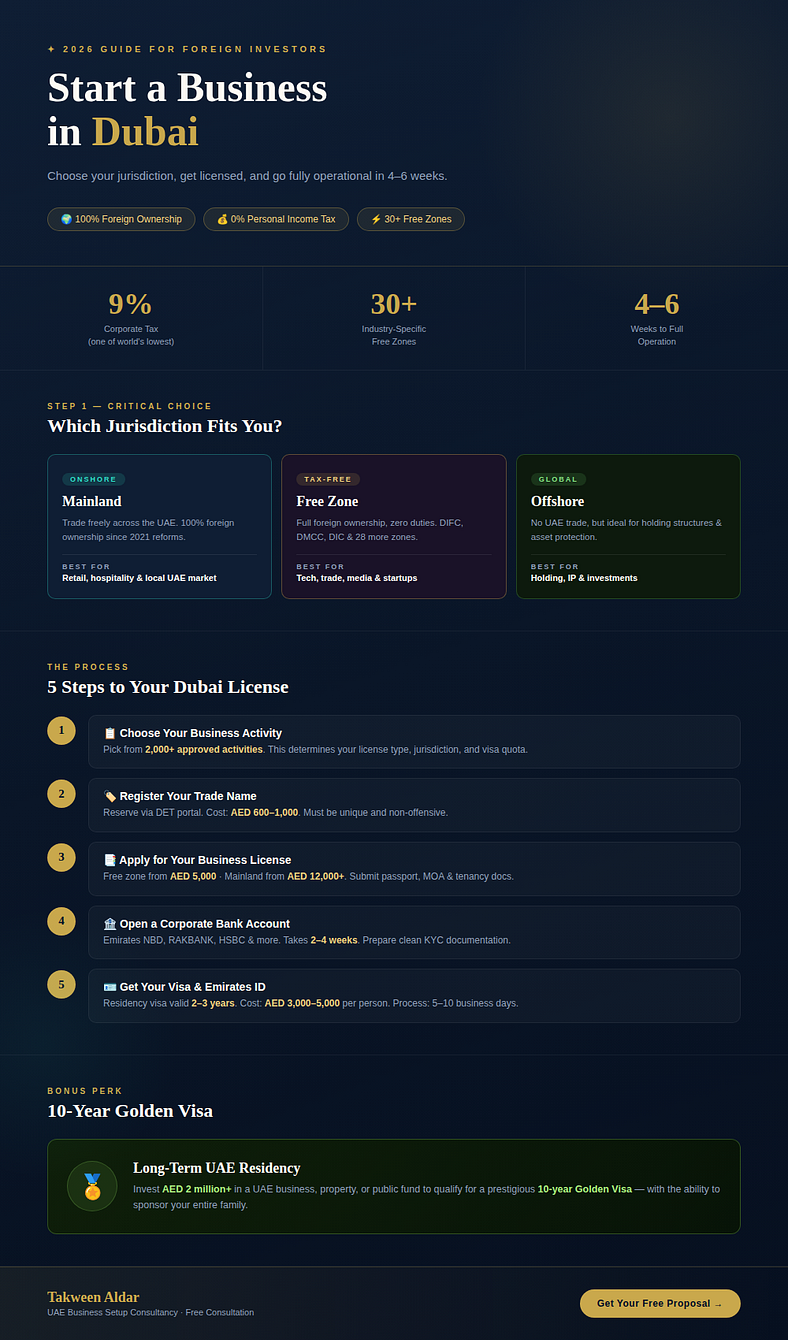
Dubai has long been a beacon for global entrepreneurs — a city where ambition meets opportunity at every corner. But in 2026, the game has changed even further. With sweeping regulatory reforms, expanded free zone incentives, and a UAE visa ecosystem designed to attract top-tier talent and capital, business setup in Dubai as a foreign investor has never been more accessible — or more rewarding. Whether you are eyeing a mainland trade license, a free zone company registration, or a professional service license, the pathways have never been clearer.
Whether you are a solo founder bootstrapping your first venture or a seasoned investor deploying capital across markets, this guide will walk you through everything you need to know about business setup — from choosing the right jurisdiction and legal structure to obtaining your Emirates ID and corporate bank account. And if you want expert hands-on support at every stage, Takween Advisory is a trusted UAE business consultancy helping foreign investors navigate company formation, PRO services, and government approvals with ease — so you can focus on growth while they handle the groundwork.
Why Dubai? The Case for Foreign Investors in 2026

Here is what makes Dubai stand out for foreign investors in 2026:
- 100% foreign ownership is now permitted across hundreds of business activities on the mainland, following the landmark Companies Law amendments.
- 0% corporate tax applies to businesses earning below AED 375,000 annually, and a flat 9% rate applies above that threshold — still one of the lowest in the world.
- No personal income tax — ever. What you earn, you keep.
- World-class infrastructure spanning logistics, fintech, healthcare, tourism, and technology.
- Strategic location connecting Europe, Asia, and Africa within a 4–8 hour flight radius.
- Golden Visa eligibility for investors, allowing long-term residency of 5–10 years.
Step 1: Choose Your Business Activity

Every business in Dubai must be registered under a specific licensed activity. The Department of Economy and Tourism (DET) maintains a comprehensive list of over 2,000 approved activities spanning commercial, professional, industrial, and tourism sectors.
Your chosen activity will determine:
- Which jurisdiction you can operate in (mainland vs. free zone)
- What type of license you need
- The minimum capital requirements, if any
- The number of visas your company can sponsor
Step 2: Decide Between Mainland, Free Zone, or Offshore

This is perhaps the most critical decision you will make during your business setup Dubai journey. Each jurisdiction offers a distinct set of rules, benefits, and limitations.
Mainland (Onshore)
A mainland company is registered directly with the DET and allows you to trade freely anywhere in the UAE and internationally. Post-2021 reforms now allow 100% foreign ownership for most activity categories — eliminating the old requirement for a 51% Emirati partner.Best for: Retail, construction, hospitality, healthcare, and businesses targeting the local UAE market.
Free Zone
Dubai boasts over 30 free zones, each tailored to a specific industry — from DIFC (finance) and DMCC (commodities) to Dubai Internet City (tech) and Dubai Media City (creative industries). Free zones offer full foreign ownership, zero import/export duties, and simplified setup procedures.Best for: International trade, tech startups, media companies, consultancies, and import/export businesses.
Offshore
An offshore company in Dubai (typically registered in Jebel Ali or RAKICC) cannot conduct business within the UAE but is an excellent vehicle for international holding, asset protection, and tax-efficient structures.Best for: Holding companies, IP holding, global investments, and asset management.
Step 3: Select Your Legal Structure

Once you have chosen your jurisdiction, you will need to decide on a legal structure. The most common options for foreign investors include:
- LLC (Limited Liability Company): Most popular for mainland setups. Requires a minimum of 2 shareholders.
- Sole Establishment / Sole Proprietorship: Ideal for individual professionals but limited to certain activity types.
- Branch Office: Allows a foreign company to establish a presence in Dubai without creating a new legal entity.
- Free Zone Company (FZC/FZE): Specifically for free zone setups; FZE is a single-shareholder structure, while FZC allows multiple shareholders.
- DIFC or ADGM Entity: For financial services companies regulated under international common law frameworks.
Step 4: Register Your Trade Name
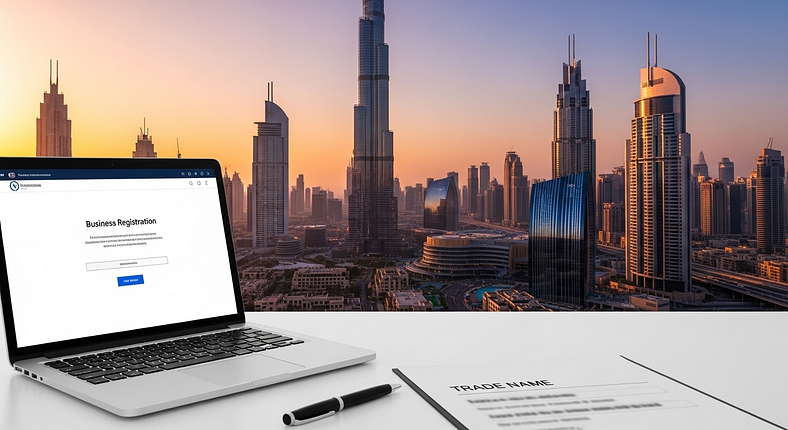
Your company name must comply with UAE naming conventions. The rules are straightforward but important:
- It must not contain offensive or religiously sensitive language.
- It must not replicate an existing registered name.
- It must reflect the nature of your business activity (for some license types).
- Abbreviations of personal names are allowed for professional licenses.
Step 5: Apply for Your Business License

With your trade name approved and legal structure confirmed, you can proceed to the next phase of your business setup in Dubai — license registration. The documents typically required include:
- Passport copies of all shareholders and directors
- Completed application forms (jurisdiction-specific)
- Memorandum of Association (MOA) or Articles of Association
- NOC (No Objection Certificate) from current UAE employer, if applicable
- Business plan (required for some regulated activities)
- Proof of address or tenancy agreement (Ejari for mainland companies)
Step 6: Open a Corporate Bank Account

Dubai’s banking sector is robust and globally connected. Major banks serving foreign business owners include Emirates NBD, Mashreq, RAKBANK, ENBD, and international institutions like HSBC and Citi.
Opening a corporate bank account requires your trade license, MOA, shareholder passports, proof of business activity, and in some cases a business plan. The process typically takes 2–4 weeks and may involve an interview with a bank relationship manager.
Important: Due to enhanced KYC (Know Your Customer) and AML (Anti-Money Laundering) compliance requirements, banks conduct thorough due diligence. Having a clear, well-documented business model will significantly speed up the process.
Step 7: Apply for Visas and Emirates ID

Once your license is issued, you can begin sponsoring visas. As the business owner, you are entitled to a residency visa, typically valid for 2–3 years and renewable. You can also sponsor visas for employees and dependents based on your company’s visa quota.
The residency visa process involves:
- Entry permit issuance
- Medical fitness test
- Emirates ID registration (biometrics)
- Visa stamping on passport
Golden Visa: Foreign investors who invest AED 2 million or more in a UAE business, property, or public investment fund may qualify for a 10-year Golden Visa — offering long-term stability and a pathway to deeper UAE integration.
Common Mistakes Foreign Investors Make (And How to Avoid Them)
Even the most prepared entrepreneurs make avoidable errors during the setup process. Watch out for these:- Choosing the wrong jurisdiction — Operating from a free zone but targeting UAE retail customers without the right permissions will lead to compliance issues.
- Underestimating renewal costs — Licenses, visas, and office leases must all be renewed annually or biannually.
- Skipping legal advice — MOA drafting and shareholder agreements require professional input, especially for multi-partner ventures.
- Poor banking preparation — Walking into a bank without a complete document set causes unnecessary delays.
- Ignoring VAT registration — Businesses with taxable supplies exceeding AED 375,000 annually must register for 5% VAT with the Federal Tax Authority.
Ready to Make Your Move? Partner With Takween Advisory Today
Starting a business in Dubai is one of the most rewarding decisions a foreign investor can make — but navigating the paperwork, choosing the right jurisdiction, and staying compliant with UAE regulatory requirements requires local expertise. That is where a professional business setup consultant like Takween Advisory makes all the difference.Don’t leave your Dubai dream to chance. Book a free consultation with a certified UAE business setup specialist today and get a tailored proposal for your exact business activity, budget, and goals. Whether you are launching a startup, expanding an existing brand, or setting up an investment vehicle, the right guidance can save you thousands of dirhams and months of frustration.
In case you are planning to close or restructure your service based business, understanding professional trade license cancellation Dubai with the right guidance ensures a smooth and hassle free process. Proper cancellation helps you avoid penalties, settle liabilities, and remain compliant with regulations. At Takween Advisory, we handle everything from document verification to final approvals so your license cancellation is completed efficiently while you focus on your next business move.
Frequently Asked Questions (FAQs)
Q1: Can a foreigner own 100% of a business in Dubai?Yes. As of the 2021 Commercial Companies Law amendments, foreign nationals can own 100% of their mainland company across most business activities. Free zones have always permitted full foreign ownership.
Q2: How much does it cost to start a business in Dubai in 2026?
Costs vary by jurisdiction and activity. Free zone packages start from as low as AED 5,750 for basic setups, while mainland commercial licenses typically range from AED 12,000–25,000+ inclusive of government fees.
Q3: How long does it take to set up a company in Dubai?
Most free zone companies can be registered within 3–7 business days. Mainland setups generally take 1–3 weeks, depending on the activity type and documentation completeness.
Q4: Do I need to be physically present in Dubai to register a company?
Not necessarily. Many free zones allow remote company formation with document attestation. However, bank account opening and visa processing typically require physical presence at some stage.
Q5: What is the difference between a Dubai free zone and mainland company?
A free zone company can only operate within its free zone or internationally and cannot trade directly with the UAE mainland market without a local distributor. A mainland company can conduct business anywhere in the UAE and internationally without such restrictions.
Q6: Is there corporate tax in Dubai?
The UAE introduced a 9% corporate tax in June 2023 for businesses earning above AED 375,000 annually. Businesses below this threshold are exempt. Free zone companies meeting certain conditions may still qualify for 0% tax on qualifying income.
Q7: Can I get a UAE residency visa through my Dubai company?
Yes. As a business owner, you can obtain a residency visa through your company. Investors who meet the AED 2 million investment threshold may qualify for the prestigious 10-year Golden Visa.
Q8: What is the best free zone in Dubai for a tech startup?
Dubai Internet City (DIC), Dubai Silicon Oasis (DSO), and Dubai Future District (in DIFC) are among the top choices for tech startups, offering tailored infrastructure, networking opportunities, and access to a thriving innovation ecosystem.
Conclusion
Dubai in 2026 is not just open for business — it is actively engineering the conditions for foreign investors to thrive. With 100% foreign ownership on the mainland, a competitive corporate tax regime, a dynamic free zone ecosystem, streamlined trade license procedures, and long-term residency visa options, the emirate offers one of the most investor-friendly business environments on the planet. From DET approvals to MOA drafting, from Emirates ID registration to VAT compliance — every element of the UAE’s commercial infrastructure is built to support entrepreneurial ambition.The path to launching your Dubai company is structured and achievable. Define your licensed activity, choose your jurisdiction, register your trade name, apply for your business license, open your corporate bank account, and secure your residency visa. Each step builds on the last, and with the right preparation, you can go from proposal to fully operational business in as little as 4–6 weeks.
You do not have to navigate this journey alone. Takween Advisory brings deep local expertise in UAE company formation, PRO services, government liaison, and investor visa processing — making your transition into the Dubai market smooth, compliant, and cost-effective. The opportunity is real. The infrastructure is ready. The experts are standing by. Now the only question is — are you?
TRUSTED VENDORS – ESCROW SUPPORTED
Escrow Only • PGP Chat • Verified
Stay Ghost – Feds Watching